Home

Diet for dogs with pancreatitis

Diet for dogs with pancreatitis

Diet for dogs with pancreatitis

Pancreatitis often leads to a permanent dysfunction of the organ. The diet of your dog usually has to be changed in the long term, because sick four-legged friends can no longer utilize their food without problems.

The pancreas is an important part of the digestive tract. It secretes juices containing enzymes that break down food into its smallest components. If this no longer functions properly, nutrients cannot be utilized. The body can then no longer meet its needs for vitamins, minerals and other nutrients. The disease is often chronic, which is why dogs with pancreatitis usually need a special diet.

Easily digestible food for dogs with pancreatitis

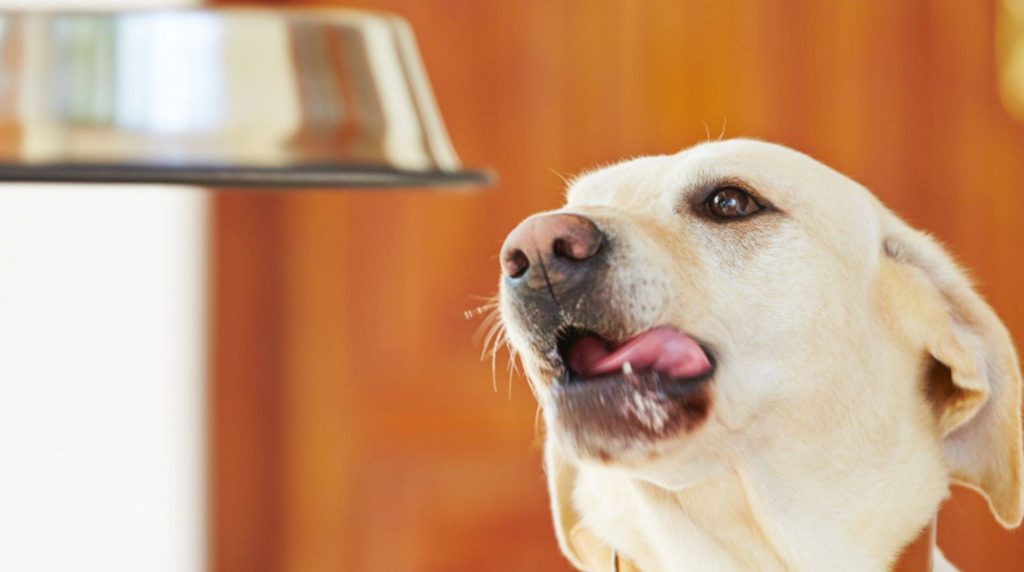
Sick dogs are put on a special diet based on easily digestible gentle food. The food should be divided into three to four smaller portions a day so as not to put too much strain on the digestive tract. To ensure that your four-legged friend gets enough energy from his food despite his illness, you should make sure that he eats enough carbohydrates. However, these should be easily digestible. Ask your veterinarian for advice. He can also tell you whether additional important vitamins and minerals such as vitamin B12, vitamin K or folic acid need to be added to the dog food. Furthermore, a particularly low-fat diet is necessary. The fat content in dry food should be reduced to about 10 to 15 percent, and in wet food to 2.5 to 4.5 percent. Coordinate this with your veterinarian as well.

Compensating for a lack of enzymes with the right diet

In the case of pancreatitis, the digestive enzymes that the organ can no longer produce itself often have to be replaced artificially. For example, there are preparations that are mixed with the dog’s food in the form of powder. The agent must “act” for 30 to 40 minutes until you can give it to your dog to eat. In this way, the food is predigested outside the body and can be better utilized. Again, it is important to consult with your veterinarian.

HZOES.COM

HZOES.COM

Cute and funny, info and tips about dogs, cats and other animals. Great pictures and funny videos from the animal world. Your animals on hzoes.com

More articles from dog

Does dry food provide benefits for the dog?
Dog Food

Does dry food provide benefits for the dog?

Does dry food provide benefits for the dog? Wet or dry food, feeding leftovers, barfing or cooking yourself? There are many different ways to feed …

Read More →
Dog walking in winter: Tips against freezing
Dog Keeping

Dog walking in winter: Tips against freezing

Dog walking in winter: Tips against freezing When four-legged friends freeze during a dog walk in winter, it can be very unpleasant for the pelt-noses. …

Read More →
Dog Training: Teaching the "Off!" Command
Dog Training

Dog Training: Teaching the “Off!” Command

Dog Training: Teaching the “Off!” Command If you want to teach your dog the command “Off!”, it is best to start with it while playing. …

Read More →
Irish wolfhounds from shelter
Dog Buying

Irish wolfhounds from shelter

Irish wolfhounds from shelter Taking Irish wolfhounds from the shelter is a good alternative to the breeder. This is because many of the large herding …

Read More →
Does the second dog move in? What to do in case of jealousy?
Dog Training

Does the second dog move in? What to do in case of jealousy?

Does the second dog move in? What to do in case of jealousy? If a second dog moves in, jealousy can arise: If the hierarchy …

Read More →
Companion and companion dogs such as the Maltese, Pug or Poodle, for example, are usually friendly, peaceful and people-oriented. Herding dogs, working dogs and working dogs such as the German Shepherd, the Bernese Mountain Dog or Australian Shepherd also enjoy working with people and are obedient and loyal if well trained. St. Bernards, Leonbergers and Newfoundlands are also stoically calm. Some hunting dog breeds, such as the friendly Beagle, the Labrador or Golden Retriever with their pronounced "will to please", are also good therapy dogs with proper socialization. Whether you choose a large, medium or small dog for animal-assisted therapy depends on its area of use. Larger dogs are more suitable for working with children and adolescents, while smaller four-legged friends are more suitable for the elderly, as they can sit on your lap or snuggle up in bed.
Dog Buying

Therapy dogs: Which four-legged friends are suitable? Unlike assistance dogs, therapy dogs are not specially trained for a single patient. Rather, together with their owner, …

Read More →
This site uses cookies

By continuing to use our site, you agree to our T & Cs and the use of our Cookies & amp;trackers as well as those of our partners in order to offer you content, services, personalized advertising and to generate statistics & amp; audience analysis.