Flat Coated Retriever: What to consider before buying
Are you considering buying a Flat Coated Retriever? If you are in the mood for a devoted, but also loving family member, this breed is just the right choice. This is also true for hunters who are looking for a loyal companion and reliable retriever. Nevertheless, you should not rush such a decision, but consider a few things.
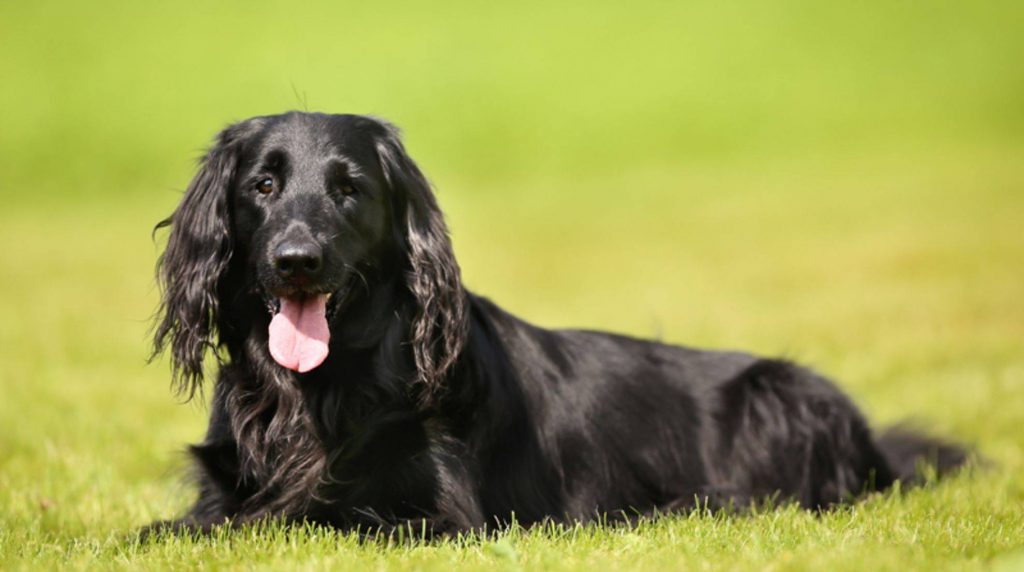
The Flat Coated Retriever from Great Britain is extremely strongly built and extremely robust. His elegant appearance is due to his smooth coat of medium length, which is mostly black – in rare cases also liver brown – colored. With a height at the withers of 60 cm and a body weight of up to 36 kg, the Flat belongs to the medium-sized dog breeds. With good health, proper care and husbandry, he can live ten to 15 years.
For whom is the Flat Coated Retriever suitable?
The Flat Coated Retriever is suitable as a pure hunting dog, but also as a family dog. However, he prefers a mixture of both. The animal needs constant connection to the family and close bonds. The Flat Coated Retriever feels most comfortable in a particularly active family, where his loved ones really have time for him. Frequent walks in nature should be the rule. People with a full time job cannot do justice to this breed. If the urge to move is sufficiently and steadily satisfied, he can feel comfortable with you even in a small apartment. To children in the family, this loyal soul likes to be a good playmate.
A Flat usually accepts other pets as family members, no matter what kind. In this regard, a positive first encounter is extremely important. Chances are good that your cat and your Flat Coated Retriever will even become thick friends or that he will allow a close bond with the first dog as a second dog. Even as a riding companion dog the breed is often used. Whereby this should not be the primary endeavor. There are other well-suited dog breeds for a shared ride.
Versatile abilities of the Flat Coated Retriever
Once bred for retrieving, this is in the Flat Coated Retriever’s blood. His playfulness and excellent nose, combined with his love of water, make him an incredibly good retriever. If he does not find his place as a hunting dog, this can be compensated with the classic dummy work. It originated in England, just like the breed, and is a joy for both dog and owner. A dummy is a kind of dummy that symbolizes a prey animal and can be used for many exciting retrieving tasks. This way the animal is always in its element. Also his cravings for water can be satisfied in this way.
But this dog breed has a lot more up its sleeve. His extraordinarily good sense of intuition and curiosity provide the four-legged friend in many other areas of popularity. Often he finds his vocation as a tracking or rescue dog – due to his high resilience even in crisis areas. A lovingly cared for Flat Coated Retriever simply gives everything for his master.
In summary: To consider before buying
If you have chosen this lively and affectionate breed, you should be prepared to rearrange your life if necessary. For example, you will have to adapt your hobbies to the needs of the dog and much more. Here’s an overview:
A Flat Coated Retriever …
● lives with you under one roof for the next ten to 15 years, as it should never live in a kennel under any circumstances
● leaves his long tufts of hair in the apartment or house during this time
● costs his owner a lot of time and energy, like all dogs he needs education to develop his strengths and character traits
● always wants to be scheduled as a full member of the family, whether for a day trip or the whole vacation – or at least be cared for by loving people while you are away
● loves the water and, in addition to other active pursuits, needs experiences in the cool water here and there
Your decision stands? Then it goes to the search for the right puppy. When doing so, refrain from dubious newspaper advertisements. Instead, look for clubs such as the DRC (Deutsch Retriever Club e.V.). The next step should be to prepare your home properly for the puppy. On the one hand, so that he feels right at home and you have a good start with the little rascal, on the other hand, his environment must be puppy-proof. Eliminate sources of danger such as power cords, cleaning products, tablets or poisonous potted plants. If there are other animals living in the household, be careful during the first contact. Finally, the guidebook “Buying initial equipment for puppies: Tips” a small shopping list for your animal addition to the family.