Home

How to raise a rough-haired dachshund?

How to raise a rough-haired dachshund?

How to raise a rough-haired dachshund?

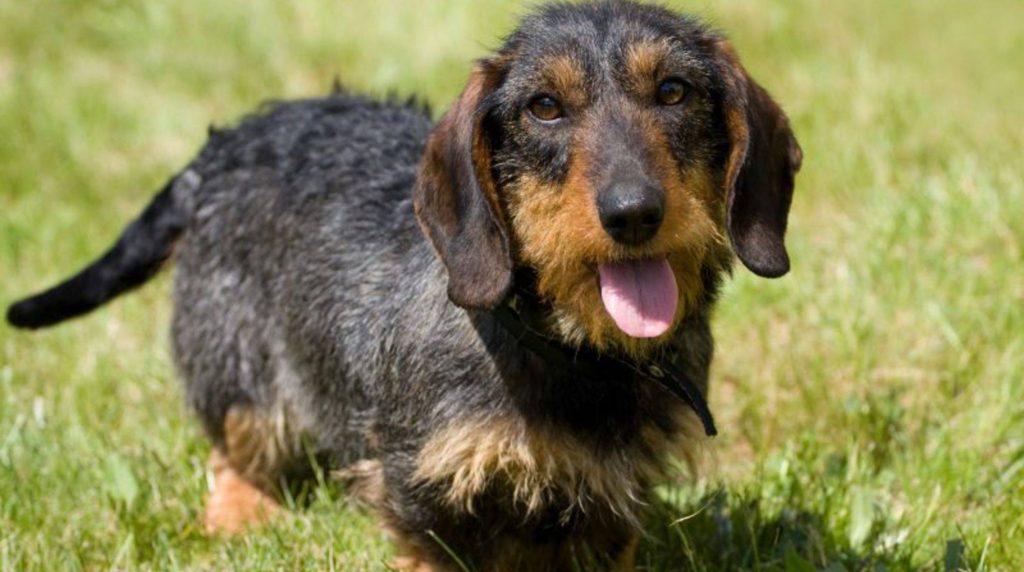
If you have a Rauhaardackel, you should attach importance to an excellent education from the beginning – the small dog with the hunting instinct is known to play otherwise gladly sometimes the stubborn.

However, this does not mean that you should be too strict with your lively pet! Loving consistency is the right way to convince your Rauhaardackel that it is good to listen to its owners.

The education of the Roughhaired Dachshund begins in puppyhood.

Educating your new pet does not only include learning commands. While he must listen well to you, it is equally essential that he is well socialized from an early age and introduced to various situations. Of course, he should associate these with positive experiences as much as possible.

For example, familiarize the self-confident little rascal with other dogs of all sizes from an early age and bring him into contact with children to learn how to interact with them. In this way, he will take what he will later encounter in his environment for granted as much as possible. It will be easier for you if you visit a good dog school with your Rauhaardackel. There, his social behavior will be promoted even more.

Consistent and affectionate: How to reach your Dachshund

Do not be angry with him even if your Dachshund is sometimes stubborn and persistent. These qualities have always helped him greatly in his hunting dog work and are innate. However, it is all the more critical that the Rauhaardackel, despite its small size, perfectly masters the basic concepts of dog training.

Praise belongs to the education of the Rauhaardackel to it.

You can achieve a lot with motivation and positive confirmation with the sweet roughneck, who likes to please his master: praise your four-legged friend for his excellent behavior. He will then know that he scores points when listening to you. This will benefit both of you in equal measure.

HZOES.COM

HZOES.COM

Cute and funny, info and tips about dogs, cats and other animals. Great pictures and funny videos from the animal world. Your animals on hzoes.com

More articles from dog

Dog photo tips: the right way to handle the dog
Dog Keeping

Dog photo tips: the right way to handle the dog

Dog photo tips: the right way to handle the dog One thing above all is essential for the perfect dog photo: a good mood. Only …

Read More →
Doberman: character and features of the dog
Dog Buying

Doberman: character and features of the dog

Doberman: character and features of the dog The Doberman is a large, strong dog that has a loyal, lovable character – but it is also …

Read More →
Are dogs allowed to eat honey? Or is that dangerous?
Dog Food

Are dogs allowed to eat honey? Or is that dangerous?

Are dogs allowed to eat honey? Or is that dangerous? Sweet and sticky, but also healthy? Opinions differ when it comes to honey and the …

Read More →
Mange in dogs: symptoms and treatment
Dog Health

Mange in dogs: symptoms and treatment

Mange in dogs: symptoms and treatment Bald patches on the coat and dandruff are just two symptoms that indicate mange in dogs. It is a …

Read More →
Why do dogs shred paper and tissues?
Dog Keeping

Why do dogs shred paper and tissues?

Why do dogs shred paper and tissues? Whether it’s toilet paper rolls, newspapers lying around, or your mail – your dog loves to shred paper? …

Read More →
Companion and companion dogs such as the Maltese, Pug or Poodle, for example, are usually friendly, peaceful and people-oriented. Herding dogs, working dogs and working dogs such as the German Shepherd, the Bernese Mountain Dog or Australian Shepherd also enjoy working with people and are obedient and loyal if well trained. St. Bernards, Leonbergers and Newfoundlands are also stoically calm. Some hunting dog breeds, such as the friendly Beagle, the Labrador or Golden Retriever with their pronounced "will to please", are also good therapy dogs with proper socialization. Whether you choose a large, medium or small dog for animal-assisted therapy depends on its area of use. Larger dogs are more suitable for working with children and adolescents, while smaller four-legged friends are more suitable for the elderly, as they can sit on your lap or snuggle up in bed.
Dog Buying

Therapy dogs: Which four-legged friends are suitable? Unlike assistance dogs, therapy dogs are not specially trained for a single patient. Rather, together with their owner, …

Read More →
This site uses cookies

By continuing to use our site, you agree to our T & Cs and the use of our Cookies & amp;trackers as well as those of our partners in order to offer you content, services, personalized advertising and to generate statistics & amp; audience analysis.