Home

Large breeds of dogs that do not shed: These are suitable

Large breeds of dogs that do not shed: These are suitable

Large breeds of dogs that do not shed: These are suitable

You have a pet hair allergy, but still do not want to give up a large four-legged friend? There are significantly more smaller dog than large dog breeds that do not shed. Nevertheless, the following popular larger dogs are considered so-called hypoallergenic breeds that do not shed as much fur in their environment.

Large dogs often shed large amounts of hair. Whether you’re allergic to dog hair or just bothered by it that way: Large dog breeds that don’t shed hair can help. But which animals lose less hair than others? The magic word here is: Undercoat – or the lack thereof. This means that the animals are not subject to a coat change and thus do not shed or hardly shed at all. Many allergy sufferers have had good experiences with these four-legged friends. But remember: There is never a guarantee.

These are large dog breeds that do not shed

A dog that was bred specifically for the needs of people with a dog hair allergy and is therefore considered hypoallergenic is the Labradoodle. This friendly fuzzy is a mixed breed of Poodle and Labrador. However, it gets its coat from the poodle: it is curly and has no undercoat, so the Labradoodle does not shed hair. You should brush and trim it regularly to keep it silky and healthy. These active family dogs belong to the large dog breeds that do not shed. In the following overview you will find other larger dog breeds that shed little to no hair:

  • Large Poodle
  • Giant Schnauzer
  • Komondor
  • Curly Coated Retriever
  • Lagotto Romagnolo
  • Airedale Terrier
  • Xoloitzcuintle (Mexican Naked Dog)

Water dogs: tips for allergy sufferers

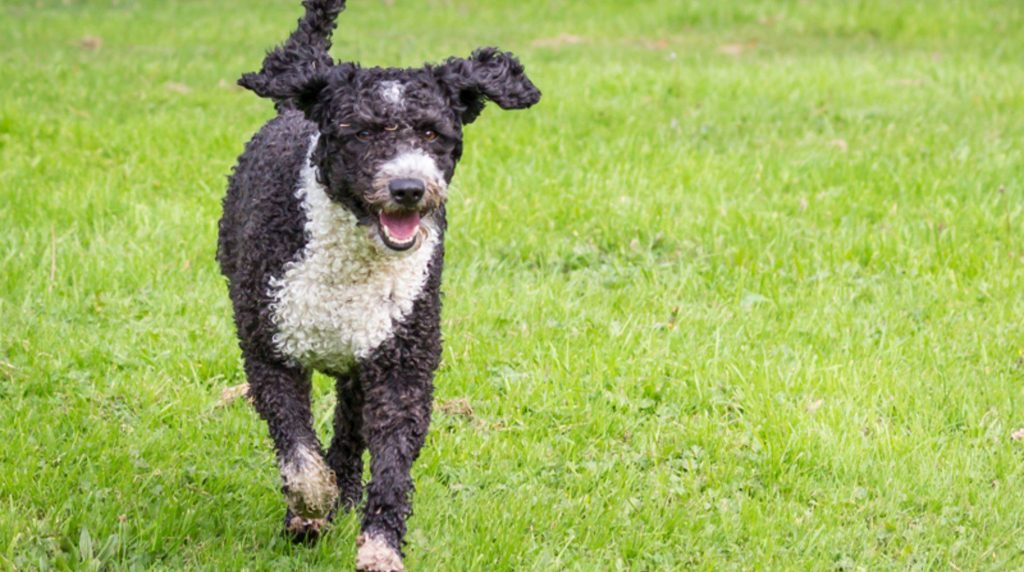
Water dogs are also popular dogs for allergy sufferers – there are both Spanish and Portuguese. A very famous Portuguese Water Dog is Bo, the sweet four-legged friend of former US President Barack Obama and his family. Water dogs have a long history: they existed almost 1,000 years ago. They also have no undercoat – but unlike the Labradoodle, their fur should not be brushed, but only trimmed once or twice a year.

HZOES.COM

HZOES.COM

Cute and funny, info and tips about dogs, cats and other animals. Great pictures and funny videos from the animal world. Your animals on hzoes.com

More articles from dog

Repel fleas and ticks in dogs: All natural, without chemicals?
Dog Health

Repel fleas and ticks in dogs: All natural, without chemicals?

Repel fleas and ticks in dogs: All natural, without chemicals? Many dog owners have reservations about using chemicals to repel fleas and ticks in their …

Read More →
Acquisition: How your life with dog changes
Dog Buying

Acquisition: How your life with dog changes

Acquisition: How your life with dog changes Acquiring a dog – yes or no? This question occupies many animal lovers. The spontaneous answer for most …

Read More →
Dog walking in winter: Tips against freezing
Dog Keeping

Dog walking in winter: Tips against freezing

Dog walking in winter: Tips against freezing When four-legged friends freeze during a dog walk in winter, it can be very unpleasant for the pelt-noses. …

Read More →
The dog is afraid of cats: What to do?
Dog Health

The dog is afraid of cats: What to do?

The dog is afraid of cats: What to do? If your dog is afraid of cats, you should carefully introduce him to the foreign species. …

Read More →
Companion and companion dogs such as the Maltese, Pug or Poodle, for example, are usually friendly, peaceful and people-oriented. Herding dogs, working dogs and working dogs such as the German Shepherd, the Bernese Mountain Dog or Australian Shepherd also enjoy working with people and are obedient and loyal if well trained. St. Bernards, Leonbergers and Newfoundlands are also stoically calm. Some hunting dog breeds, such as the friendly Beagle, the Labrador or Golden Retriever with their pronounced "will to please", are also good therapy dogs with proper socialization. Whether you choose a large, medium or small dog for animal-assisted therapy depends on its area of use. Larger dogs are more suitable for working with children and adolescents, while smaller four-legged friends are more suitable for the elderly, as they can sit on your lap or snuggle up in bed.
Dog Buying

Therapy dogs: Which four-legged friends are suitable? Unlike assistance dogs, therapy dogs are not specially trained for a single patient. Rather, together with their owner, …

Read More →
Are dogs a mirror of society?
Dog Buying

Are dogs a mirror of society?

Are dogs a mirror of society? Like dog, like master – this saying is probably familiar to everyone, and all too often it finds confirmation …

Read More →
This site uses cookies

By continuing to use our site, you agree to our T & Cs and the use of our Cookies & amp;trackers as well as those of our partners in order to offer you content, services, personalized advertising and to generate statistics & amp; audience analysis.