Home

This is what obedience training for the dog is all about

This is what obedience training for the dog is all about

This is what obedience training for the dog is all about

Obedience training is often called the “high school” of dog sports. What exactly is hidden behind the “obedience training” and how it differs from Agility, you can learn here.

The term obedience training is derived from the English word for obedience. In general, it is about a perfect understanding between man and dog. Often obedience training is compared with dressage and Agility with show jumping – so the “obedience training” is a kind of unique freestyle.

Obedience and communication

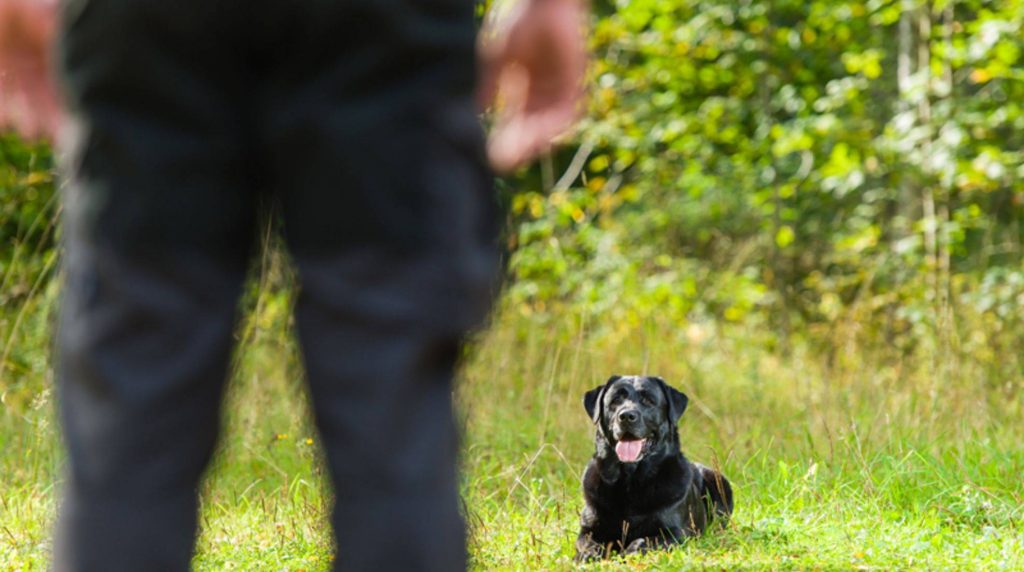
Obedience training is mainly about perfect communication between man and dog – the proper education and consistency are prerequisites here. The four-legged friend must also trust his master 100 percent – some exercises, for example, are performed over a great distance between the two partners or even out of sight.

But also, the social compatibility of the animal with other quadrupeds or humans is checked. Unlike the term “obedience” suggests, obedience training is not about the drill. Your dog should not simply track on command but follow you voluntarily and listen to you. You achieve this by making your dog enjoy the training and feel that it is beneficial for him to follow you. Generally, obedience training is appropriate for dogs of all sizes, breeds, and ages. Judges are instructed to consider the specifics of the participants when judging.

Obedience Training: History of the Dog Sport

Like Agility, obedience training originated in England. It was invented almost a century ago as part of the eventing trials. However, it has only been considered a recognized sport for dogs since 1951. There are four classes: The beginner class and classes one, two, and three. At each performance level, there are ten exercises, which must be performed consecutively without errors. Among them are retrieving, self-identification, change of position, and character.

Obedience Training and Agility: Difference?

The English term “agility” can be translated as “agility” and “nimbleness.” Although this dog sport also promotes the bond between man and dog, friendship is less the focus of interest but a significant side effect. In an agility competition, the participating dogs must run through a course with obstacles one after the other, as quickly and flawlessly as possible. The owner gives the four-legged friend body language and auditory signals to understand.

Obedience is not about speed and physical performance, but strengthening the bond between animal and owner is the ultimate goal. Therefore Obedience training is suitable for all dogs, Agility, however only for some physically fit quadrupeds. However, some dogs enjoy both sports – one does not exclude the other.

HZOES.COM

HZOES.COM

Cute and funny, info and tips about dogs, cats and other animals. Great pictures and funny videos from the animal world. Your animals on hzoes.com

More articles from dog

Doberman: character and features of the dog
Dog Buying

Doberman: character and features of the dog

Doberman: character and features of the dog The Doberman is a large, strong dog that has a loyal, lovable character – but it is also …

Read More →
Low and high stimulus threshold in dogs: what does it mean?
Dog Training

Low and high stimulus threshold in dogs: what does it mean?

Low and high stimulus threshold in dogs: what does it mean? In connection with dogs, there is often talk of stimulus threshold. But what exactly …

Read More →
Biotin for dogs: That is why it is important
Dog Food

Biotin for dogs: That is why it is important

Biotin for dogs: That is why it is important Dogs need biotin because it is involved in many metabolic and cell division processes in the …

Read More →
Dogo Argentino: Typical characteristics
Dog Buying

Dogo Argentino: Typical characteristics

Dogo Argentino: Typical characteristics The Dogo Argentino is on the breed list in some countries, but with consistent and loving education, it is a friendly …

Read More →
Companion and companion dogs such as the Maltese, Pug or Poodle, for example, are usually friendly, peaceful and people-oriented. Herding dogs, working dogs and working dogs such as the German Shepherd, the Bernese Mountain Dog or Australian Shepherd also enjoy working with people and are obedient and loyal if well trained. St. Bernards, Leonbergers and Newfoundlands are also stoically calm. Some hunting dog breeds, such as the friendly Beagle, the Labrador or Golden Retriever with their pronounced "will to please", are also good therapy dogs with proper socialization. Whether you choose a large, medium or small dog for animal-assisted therapy depends on its area of use. Larger dogs are more suitable for working with children and adolescents, while smaller four-legged friends are more suitable for the elderly, as they can sit on your lap or snuggle up in bed.
Dog Buying

Therapy dogs: Which four-legged friends are suitable? Unlike assistance dogs, therapy dogs are not specially trained for a single patient. Rather, together with their owner, …

Read More →
Constipation in dogs: causes, symptoms and what helps against it
Dog Health

Constipation in dogs: causes, symptoms and what helps against it

Constipation in dogs: causes, symptoms and what helps against it If constipation in dogs occurs only occasionally and temporarily, there is usually no cause for …

Read More →
This site uses cookies

By continuing to use our site, you agree to our T & Cs and the use of our Cookies & amp;trackers as well as those of our partners in order to offer you content, services, personalized advertising and to generate statistics & amp; audience analysis.