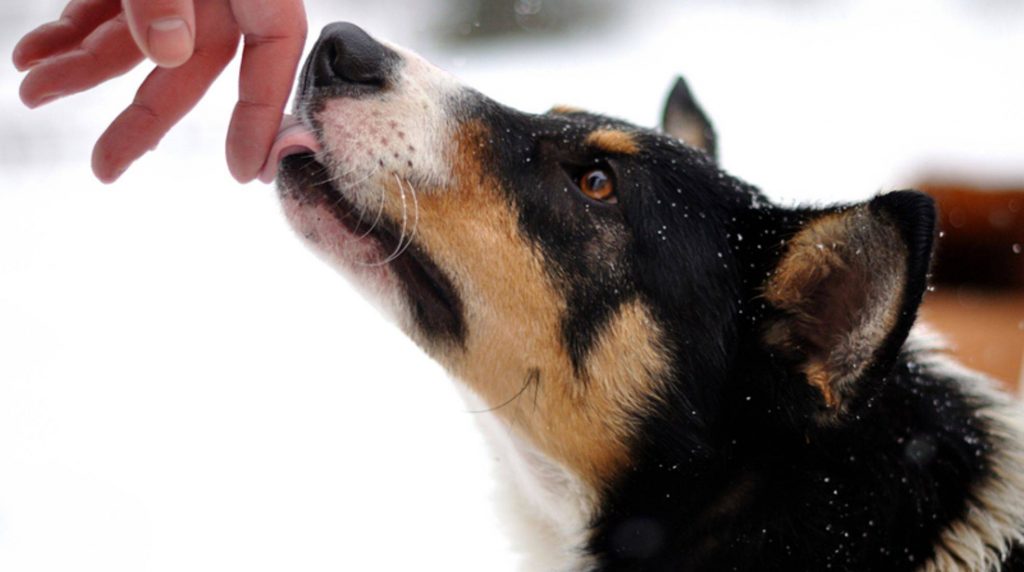
Why do dogs lick people? Meaning of “dog kisses
When dogs come near human ears or hands with their tongues, it causes different reactions; what one person finds cute causes disgust in the other. But why do dogs lick people?
Whether hands, feet, or even the face – what exactly does a dog want to express when licking people? Does it make sense to forbid the cold muzzle such an approach? Or is the wet “dog kisses” a sign of affection? To answer these questions, it is first necessary to clarify where your four-legged friend’s behavior has its roots.
Dog licking people: Early origin for the behavior
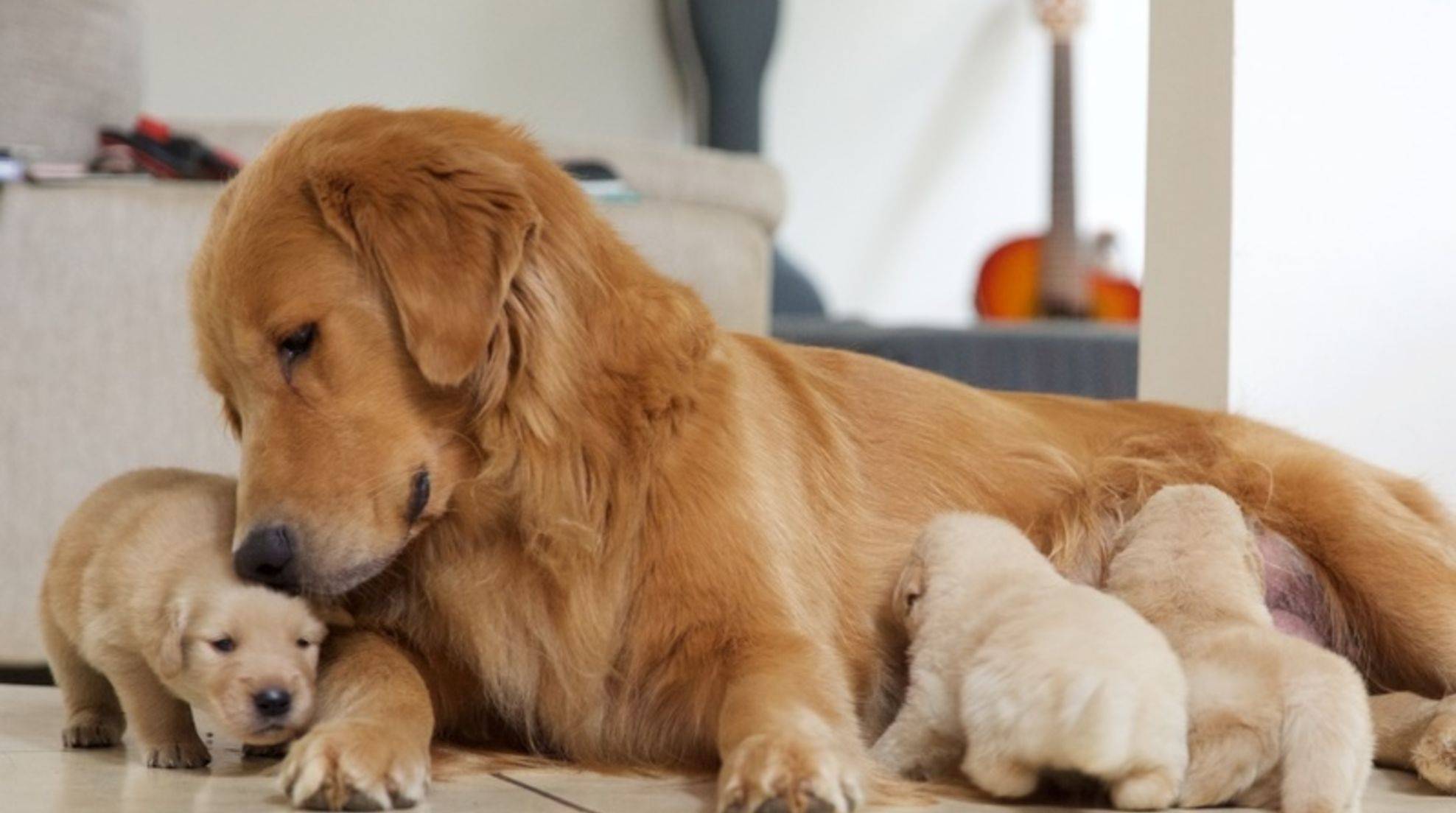
Immediately after birth, the mother dog begins to lick her puppies thoroughly. She does this for several reasons. Licking is for hygiene, stimulates the newborn’s circulation, and helps the mother accurately pick up the scent of each puppy. In addition, the bitch thus ensures that her pups feel comfortable with her from the very beginning. In addition, licking helps the puppies’ digestion once they have eaten.
It takes only a few weeks, and the young animals also lick other four-legged friends from the pack – it could be that these dogs are also suitable as a food source. In addition, the young animals show in such a way that they recognize their opposite as a higher-ranking pack member. Behind the licking, there is a practical food motive and submissiveness, and feelings like affection, love, and security.
Why do dogs lick people? Possible meanings
With this prior knowledge, the question of why dogs lick people can be answered almost wholly, because: As once with the dog mother, the four-legged friends also want to show their human in this way affection and submissiveness. Other possible meanings of “dog kisses” are:
Communication
Attracting attention
Exploration
Picking up the taste of the dog owner
If a baby is being licked, the furry nose is mainly showing its affection by doing so. If a dog licks an adult, it usually does so out of a mixture of love and submissiveness. It is also possible that the dog wants to communicate something else. For example, “Feed me.” Or the four-legged friend does not feel sufficiently noticed and wants to attract your attention.
The pure attempt to get to know the respective human better could also be behind the licking. After all, dogs perceive their environment mainly with their snout and tongue. In addition, every dog owner has a distinctive, unique smell and taste for their four-legged friend. So what could be more natural than to make sure of this identifying feature regularly?
Hygienic concerns and habituation
But can’t dogs be trained away from this behavior? After all, dog saliva is not harmless to us: the four-legged friends are on the move in many places where they can pick up pathogens in their mouths that are unhealthy for humans. In this respect, it is recommended to avoid licking the face.
But why do dogs lick people’s ears and faces in the first place? Your pet usually wants to prove its affection by licking you or to appease you when you are tense. Accordingly, it would be wrong to forbid the dog to lick thoroughly. Your four-legged friend would not be able to understand a ban. The solution is to offer your hands to your pelt-nose if it wants to lick your ears or face. This way, you strengthen your bond, and the subsequent hand washing is done quickly.
If your pet continues to try to lick your head, turn away completely and ignore your dog for 30 seconds. If the situation repeats itself, the quadruped will sooner or later understand that licking the head does not lead to more attention and treats – quite the opposite. The behavior will change.
Caution. Even more, caution is needed with babies, as they are more susceptible to pathogens. In this case, you should always clean the licked hand or foot immediately to be on the safe side. Babies and dogs should also never be left alone in a room; always watch the situation.