Home

Heartburn in dogs: what can be done?

Heartburn in dogs: what can be done?

Heartburn in dogs: what can be done?

Not only do people have heartburn, but a dog can also suffer from hyperacidity of the stomach contents. How to recognize and treat heartburn in dogs, you will learn here.

Heartburn is a hyperacidity of the stomach contents, which is not always easy to detect in dogs – not even by the vet. Measures such as blood tests or X-rays do not provide any information about it, so it is essential to observe the symptoms closely and pay attention to possible changes in behavior.

What is heartburn?
The food eaten enters the stomach through the esophagus in a healthy dog. There, stomach acid is produced to help break down and digest the food. The stomach has two sphincters that act as “gatekeepers”: one where the dog’s food passes from the esophagus into the stomach, and the other where the food continues from the belly toward the intestines.

Once the first sphincter (reflux barrier) is somewhat weak, the aggressive stomach acid produced can migrate back into the esophagus – including stomach contents. This often happens when too much stomach acid is produced (hyperacidity). However, a lack of stomach acid can also lead to heartburn: In this case, the food is not digested fast enough, ferments in the stomach, leading to unpleasant belching, including stomach contents.

In both cases, your dog will have heartburn.

Heartburn in dogs: Possible causes
In addition to a weak reflux barrier, factors such as stress or an imbalance in hormone balance can also promote heartburn in dogs. Also, incorrect feeding can hurt the stomach of the four-legged friend. Portions that are too large, food that is too fatty, a lot of grain, or strongly spiced food promote heartburn – especially if a dog is fed this way over a more extended period.

Recognize heartburn in dogs: Symptoms
You can recognize heartburn in dogs by various symptoms. The diagnosis is difficult because the individual signs can also indicate other diseases or be a completely harmless, temporary phenomenon.

These symptoms indicate the disease also called reflux esophagitis:

Increased salivation
Increased smacking
Eating grass
Excessive licking (of the floor, surfaces, or self)
Belching
Difficulty swallowing
Gagging
Coughing
Vomiting (including mucus).
If you notice one or more of these signs in your dog, don’t hesitate to see a veterinarian. He can determine if the symptoms are concomitants of acid reflux or indicative of other diseases.

Treat heartburn in dogs: What helps?
Simple home remedies help against heartburn in dogs. For example, your four-legged friend should drink more water to dilute the stomach acid. Other home remedies for reflux esophagitis in dogs are:

It cools herbal tea from stomach-friendly herbs such as fennel or aniseed.
Carrot juice
Healing earth
Important: Even with proven home remedies, always note the dosage and talk to your vet in advance about whether it is suitable for your dog!

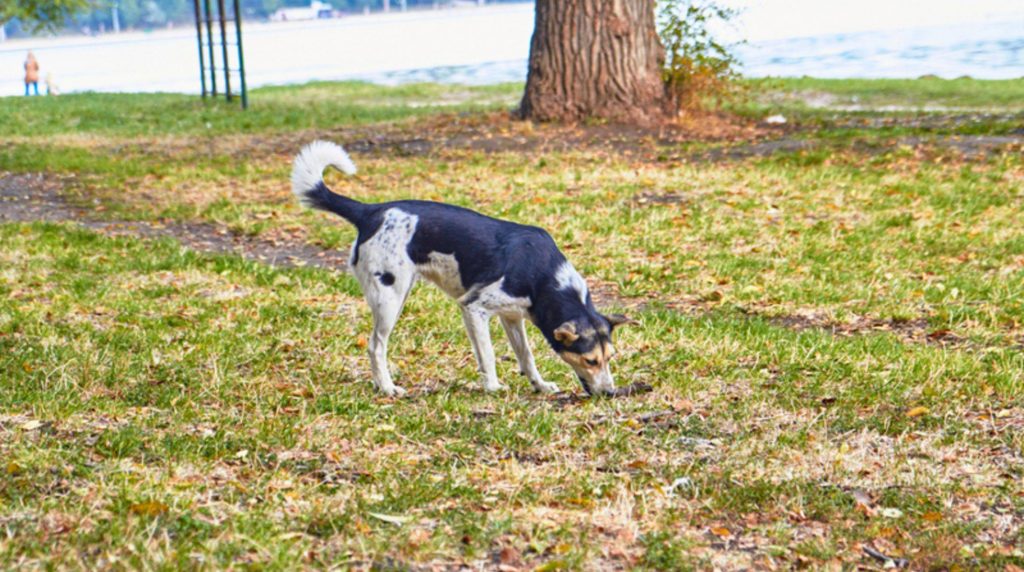
Less home remedy and more instinctive “extinguishing agent” for heartburn is grass. Indeed you have already observed that your dog nibbles on grass from time to time. This is how he regulates the acidity of his stomach, among other things. Just let your animal friend eat a few stalks when he has heartburn – in many cases, this solves the problem.

Which food for heartburn? Feed your dog with a gentle diet
Be sure to avoid hard-to-digest foods for your dog plagued by heartburn. Bones should also not be fed during this time.

Instead, the diet should include foods low in carbohydrates, low in fat, and therefore easy to digest. As Schonkost for a dog with heartburn is suitable for example:

lean meat
Curd cheese
Cottage cheese
Vegetable porridge
To avoid straining the digestion too much, it is best to divide the food into small portions. Four to five rations a day are ideal. Does your dog have heartburn all the time? Then he may be suffering from a lack of gastric acid. In this case, it is even more important to feed only small portions so that the food does not start to ferment in the stomach.

Necessary: In general, you should never use human heartburn remedies on your four-legged friend without veterinary advice. If your dog suffers from hyperacidity for a more extended period or shows the symptoms mentioned above, take him to the vet. If necessary, he can also use medication to combat the problems.

HZOES.COM

HZOES.COM

Cute and funny, info and tips about dogs, cats and other animals. Great pictures and funny videos from the animal world. Your animals on hzoes.com

More articles from dog

American Staffordshire Terrier: Education
Dog Training

American Staffordshire Terrier: Education

American Staffordshire Terrier: Education Raising an American Staffordshire Terrier requires a sense of responsibility and excellent dog skills. Under no circumstances does this large, powerful …

Read More →
Uncategorized

My Full Experience Using TreHouse Products

Over the past several weeks, I’ve been experimenting with a variety of products from TreHouse, a brand well-known for its hemp-derived cannabinoids like Delta-9, HHC, …

Read More →
Dalmatians: nature and character of the beautiful dogs Clever, fun-loving and very active: Dalmatians charm not only with their pretty appearance, but also with their lively and affectionate nature. Who wants to acquire a dog of this breed, but should first think carefully whether the character of the four-legged friend really suits him. In order to find out, you should inquire well about the nature and the optimal keeping conditions of a Dalmatian before the acquisition. Of course, each Dalmatian is individual, but you will find the characteristics discussed below in many representatives of this dog breed. Dalmatians: Lively dogs that need clear rules A well-behaved, sweetly treated and well-used Dalmatian has a happy, playful and affectionate nature. He is a smart, adaptable family dog who needs lots of love and is sensitive to pressure and stress: Anyone who meets the Dalmatian with too harsh or unfair dog training will most likely get to know him from his stubborn side. Praise, on the other hand, will achieve much more with him, so positive reinforcement is the best training method for him. Despite their sensitivity, Dalmatians are definitely self-confident dogs with strong characters that can become stubborn if you don't take the lead. It is important that you don't use an authoritarian style of leadership and definitely don't try aversive training methods on your dog. Instead, you can use clear instructions, consistency and patience to ensure that your Dalmatian follows you of his own accord. If you use clear commands and regular training to ensure that your four-legged friend understands what you want him to do, but at the same time treat him lovingly, he will voluntarily follow you. Nervous nature? Prejudices against Dalmatians For a while there was a rumor that Dalmatians were nervous and even aggressive in character. This was due to the fact that the dog breed with the black dots experienced a boom as a result of the Disney cartoon "101 Dalmatians" in the 1970s. Unscrupulous breeders and inexperienced breeders followed the trend and bred the dogs without paying attention to their mental well-being and decent socialization from puppy paws. If dogs do not grow up in a safe environment from birth and get to know other people, conspecifics and other animals as well as everyday noises at an early age, they are particularly skittish later on. Some then compensate their fearfulness and nervousness with aggression. However, this has nothing to do with the breed, but with a lack of socialization and education. History of the dog breed and importance for its character Dalmatians are a very old dog breed and it has not been handed down beyond doubt what their original purpose was. However, they later proved their worth in Great Britain and the USA as companion dogs of horse carriages. In the USA they were frequent companions of the fire department when their carriages were still pulled by horses. By their barking they drew attention to the arrival of the fire department, so they were a kind of siren on four paws. They also guarded the carriages and kept stray dogs away. It is also believed that Dalmatians acted as guard dogs on farms, chasing away pests from the farm. For its nature, this means that mainly character traits such as alertness, intelligence and attention, as well as versatility were taken into account in breeding. In addition, the dogs are physically enduring and capable of making independent decisions when needed. At the same time, however, they feel very comfortable in the company of people and help their two-legged partner with great pleasure. The Dalmatian and its nature: Occupation is important The Dalmatian is very lively, which he shows only outside, if he is properly exercised. He loves to run and does this with a lot of endurance. Occupation for the little head is a must for the intelligent dog. The four-legged friend feels best in a family where there is a lot going on. He also gets along with children, as long as they do not tease him or treat him as a toy. As a city dog or animal that is constantly alone or mentally and physically underchallenged, he would not only become unhappy, but could also develop behavioral problems. So overall, the Dalmatian is an advanced dog that needs an owner who is well versed in the breed and its characteristics! Dog sports for the Dalmatian In order for your Dalmatian to really let off steam, it is recommended that you engage in regular dog sports with him. Dog dancing, for example, is both mentally and physically a great activity for the pretty spotted bearer. But agility and obedience training also come into question.
Dog Buying

Dalmatians: nature and character of the beautiful dogs

Dalmatians: nature and character of the beautiful dogs Clever, fun-loving and very active: Dalmatians charm not only with their pretty appearance, but also with their …

Read More →
Companion and companion dogs such as the Maltese, Pug or Poodle, for example, are usually friendly, peaceful and people-oriented. Herding dogs, working dogs and working dogs such as the German Shepherd, the Bernese Mountain Dog or Australian Shepherd also enjoy working with people and are obedient and loyal if well trained. St. Bernards, Leonbergers and Newfoundlands are also stoically calm. Some hunting dog breeds, such as the friendly Beagle, the Labrador or Golden Retriever with their pronounced "will to please", are also good therapy dogs with proper socialization. Whether you choose a large, medium or small dog for animal-assisted therapy depends on its area of use. Larger dogs are more suitable for working with children and adolescents, while smaller four-legged friends are more suitable for the elderly, as they can sit on your lap or snuggle up in bed.
Dog Buying

Therapy dogs: Which four-legged friends are suitable? Unlike assistance dogs, therapy dogs are not specially trained for a single patient. Rather, together with their owner, …

Read More →
Rabies vaccination in dogs: is it necessary?
Dog Health

Rabies vaccination in dogs: is it necessary?

Rabies vaccination in dogs: is it necessary? Rabies vaccinations are intended to prevent infection with the rabies virus. Although Germany has been considered virtually rabies-free …

Read More →
Adopt English bulldog from shelter
Dog Buying

Adopt English bulldog from shelter

Adopt English bulldog from shelter The fact that the English Bulldog has become a fashionable dog in recent years is not always to its advantage. …

Read More →
This site uses cookies

By continuing to use our site, you agree to our T & Cs and the use of our Cookies & amp;trackers as well as those of our partners in order to offer you content, services, personalized advertising and to generate statistics & amp; audience analysis.