
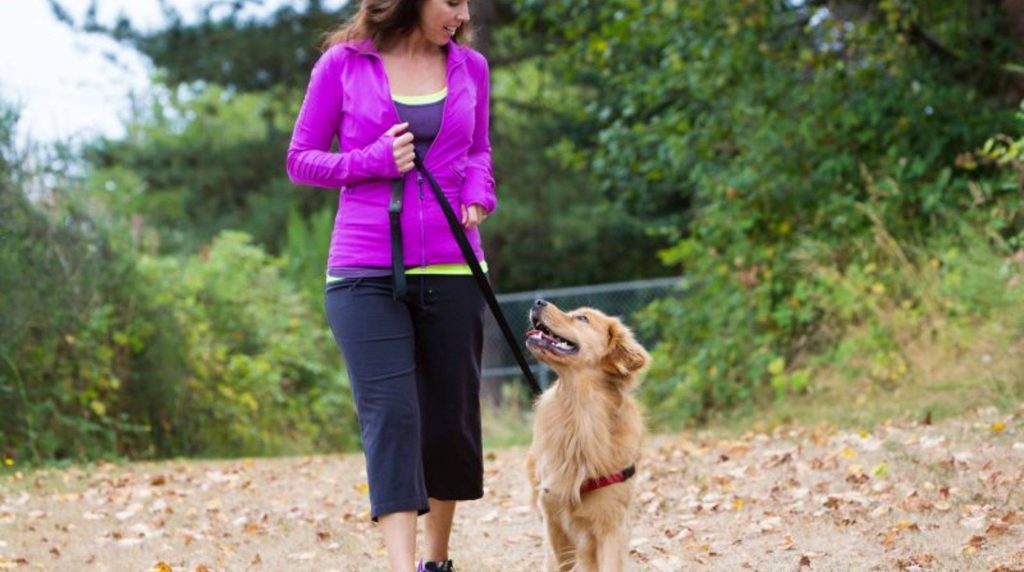
How to teach your dog the “heel” command
If you want to teach your dog the “heel” command, it’s best to start training when your dog is still a puppy. Your dog learns remarkably quickly and eagerly at a young age – you should take advantage of this.
Your puppy already walks well on the leash and has mastered the first commands such as “sit” and “down”? Excellent, you can now include the command “heel” in your training program. Your dog should learn to walk obediently at your side on the command “Heel” – even without a leash. Read here how you can teach him.
Practice during a dog walk
Your four-legged friend learns the command “heel” best in several steps during a dog walk. For the training units, you need mainly time and patience. If possible, always start the training towards the end of the walk. If the dog has already had a good romp and done his business, it will be easier for him to concentrate fully on you. Leash your protégé – now you have to decide whether your pet should heel to your left or right when you give the command.
Command “heel”: First training steps
To begin with, give your four-legged friend the command “Sit,” exactly when he is walking on the desired side right next to you. Praise him when he obeys the order well. Now clearly give the command “Heel” and take one or two steps forward without pulling on the leash. When you do this, take the first step with the foot the dog is sitting by. If everything works, your dog will walk with you. If he doesn’t, try again in a few minutes. When he has successfully walked two or three steps at your side, bring him back to the starting position with the command “Sit.”
Through repetition and praise, the dog learns.
Your dog will learn what to do at the “heel” command if you repeat the exercise frequently and reward him each time he does precisely what you want him to do. It’s best to practice a few times on each walk. If your animal friend walks the two steps beside you on the leash obediently, he will be praised – if not, no reaction from you will follow. He will quickly understand what you expect from him.
Deepen the training
As soon as your dog has mastered the basics of walking at heel, increase the number of steps your four-legged friend should walk next to you. Finally, practice the command off-leash. If it doesn’t work and your pet suddenly runs ahead of you or stops, the training session may have gone too fast: reduce the number of steps again.
What to do if the dog does not listen to the command “heel”?
If your dog has difficulty understanding the “heel” command and responding to it as desired, it’s best to start over. Perhaps your four-legged friend was too distracted during the walk and couldn’t concentrate as well. So move the first exercise sessions to your home in the living room or your garden. Do only concise lessons initially and increase the time only when you notice that your dog is still receptive.
If it works at home as desired, you can move the lessons outside, preferably at first, on quiet routes and that your animal friend already knows. Later, you can practice on unfamiliar roads with more distractions. If your dog tends to run away as soon as you take him off the lead, train with him on the information. If, despite everything, you do not succeed in teaching your dog the “heel” command, a professional dog trainer will help you.
In the following video, you will get a few more tips from animal trainer Kathrin and her four-legged partner Shelly: