Home

The circulatory collapse in dogs: what to do in case of syncope?

The circulatory collapse in dogs: what to do in case of syncope?

The circulatory collapse in dogs: what to do in case of syncope?

If your dog suddenly suffers a circulatory collapse and this only for a few seconds, then it is called syncope. What are the symptoms and causes, and how should you act? You will learn here.

A horror scenario for every dog owner: Your pet has collapsed to the ground and is no longer reacting. Unconsciousness can occur for many reasons. A syncope, i.e., a circulatory collapse in a dog, is one.

What is syncope?

A dog suffers a sudden fainting spell in a syncope without any signs. The strange thing is that unconsciousness due to circulatory collapse lasts only a short time. After only a few seconds, the dog is back on its feet. He is awake and usually behaves – as if nothing had happened.

The circulatory collapse in dogs: This is what happens

Syncope occurs when the brain is briefly no longer supplied with sufficient blood and thus with enough oxygen. The dog then reacts with a fainting fit and falls to the side; then, the blood reaches the brain better again. The animal then regains consciousness. But how does a circulatory collapse occur in a dog?

Possible causes of syncope

The reasons for a circulatory collapse in dogs are manifold. However, syncope is a symptom, i.e., an indication of another disease. Frequently, syncope in dogs is based on heart and brain diseases. This can be, for example, cardiac arrhythmia, valvular disease, vasoconstriction, or even a brain tumor.

It is usually tricky to distinguish syncope from an epileptic seizure. Both are very similar. However, the dog’s behavior during the loss of consciousness is crucial.

Convulsions almost always accompany epileptic seizures. The quadruped rows with their limbs salivate and jerk violently with the head, whereas dogs slump limply during a syncope.

Syncope in dogs: What to do?

Since the circulatory collapse in dogs can indicate a severe medical condition, you should not hesitate to see a veterinarian if your dog only has a fainting spell for a few seconds.

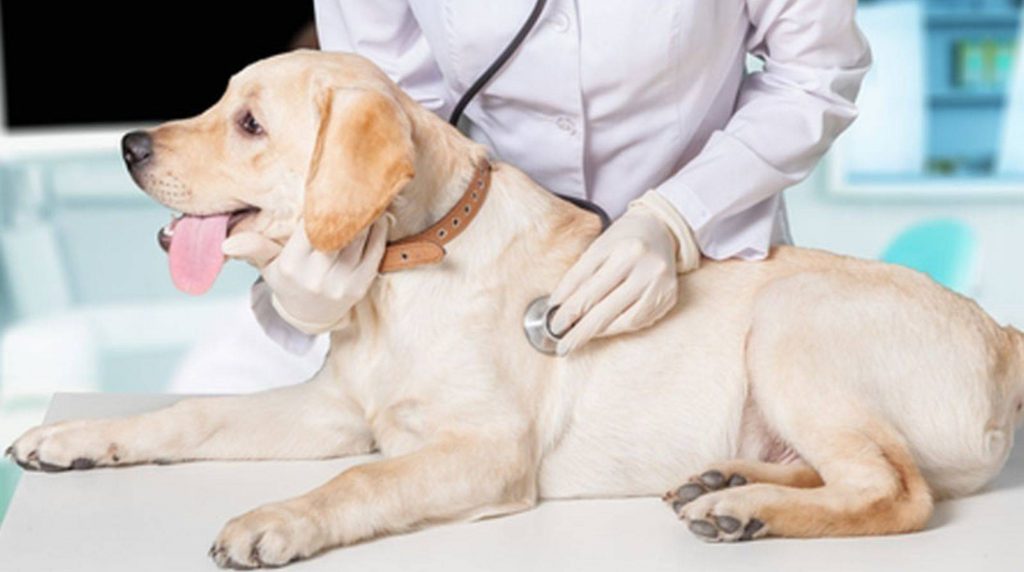
The veterinarian can perform various tests such as blood tests, ultrasound, and X-ray examinations to provide information about the underlying disease. He will then begin appropriate treatment.

The circulatory collapse in dogs: how is it treated?

Syncope is not treated directly. The therapy depends on the underlying disease. While for some conditions that can cause circulatory collapse, medication and possibly a change in diet are sufficient, surgery may well be necessary for other conditions, such as a brain tumor.

HZOES.COM

HZOES.COM

Cute and funny, info and tips about dogs, cats and other animals. Great pictures and funny videos from the animal world. Your animals on hzoes.com

More articles from dog

Dog drinking from the toilet: Is it dangerous?
Dog Health

Dog drinking from the toilet: Is it dangerous?

Dog drinking from the toilet: Is it dangerous? Quite disgusting: your dog drinks the water from the toilet. But the strange preference for the unique …

Read More →
Dog stinks when wet: what could be the cause?
Dog Keeping

Dog stinks when wet: what could be the cause?

Dog stinks when wet: what could be the cause? Dog love also means going outside with the pelt nose in wind and weather. The dog …

Read More →
Dogo Argentino: Typical characteristics
Dog Buying

Dogo Argentino: Typical characteristics

Dogo Argentino: Typical characteristics The Dogo Argentino is on the breed list in some countries, but with consistent and loving education, it is a friendly …

Read More →
Health check for dogs: tips for home
Dog Health

Health check for dogs: tips for home

Health check for dogs: tips for home The health and well-being of our four-legged friends are some of the essential things in life for dog …

Read More →
Puppy protection: How long is it valid?
Dog Keeping

Puppy protection: How long is it valid?

Puppy protection: How long is it valid? Regarding how long puppy protection applies among dogs, it is important to note another thing: Unconditional consideration for a …

Read More →
Companion and companion dogs such as the Maltese, Pug or Poodle, for example, are usually friendly, peaceful and people-oriented. Herding dogs, working dogs and working dogs such as the German Shepherd, the Bernese Mountain Dog or Australian Shepherd also enjoy working with people and are obedient and loyal if well trained. St. Bernards, Leonbergers and Newfoundlands are also stoically calm. Some hunting dog breeds, such as the friendly Beagle, the Labrador or Golden Retriever with their pronounced "will to please", are also good therapy dogs with proper socialization. Whether you choose a large, medium or small dog for animal-assisted therapy depends on its area of use. Larger dogs are more suitable for working with children and adolescents, while smaller four-legged friends are more suitable for the elderly, as they can sit on your lap or snuggle up in bed.
Dog Buying

Therapy dogs: Which four-legged friends are suitable? Unlike assistance dogs, therapy dogs are not specially trained for a single patient. Rather, together with their owner, …

Read More →
This site uses cookies

By continuing to use our site, you agree to our T & Cs and the use of our Cookies & amp;trackers as well as those of our partners in order to offer you content, services, personalized advertising and to generate statistics & amp; audience analysis.