Home

Boxer: 6 exciting facts about the dog breed

Boxer: 6 exciting facts about the dog breed

Boxer: 6 exciting facts about the dog breed

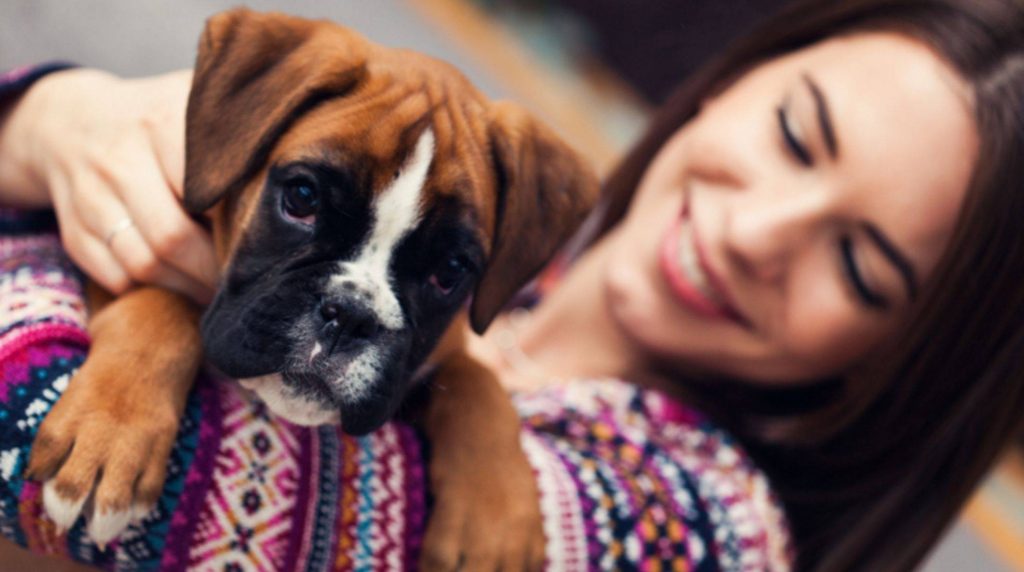
The Boxer is one of the most versatile and lovable dog breeds. The muscular all-rounder is on the one hand an affectionate family dog and on the other hand an active companion as well as predestined for various tasks of a sporty working dog. Here you will find six exciting facts about the playful four-legged friend.

The Boxer looks quite a bit scary with his strong stature and self-confident appearance. However, anyone who takes a closer look at this great dog breed will quickly realize that behind the medium-sized dog lies a very loving, child-friendly and loyal furry nose. The Boxer is virtually the ideal family dog, provided it is properly challenged and exercised.

  1. boxer has an eventful past

The Boxer goes back to the so-called bull biters of the Middle Ages. Especially in England, the brutal “sport” of bull biting, where dogs ran down a bull for the amusement of the spectators, was a popular form of entertainment. The dogs used for this purpose were to some extent the ancestors of today’s boxers. By the way: The cruel animal fights were forbidden in England at the beginning of the 19th century fortunately.

  1. from bull biter to working dog to family dog

The Boxer has been bred in uniform type since the end of the 19th century. He quickly made “career” as a hardworking and powerful working dog and was officially recognized as a service dog in 1924. Today, Boxers exist much more as alert, playful and spirited family and sporting dogs.

  1. dog breed with very long childhood

Boxers belong to the dog breeds with the longest childhood. They are not considered adults until they are three years old. This is a very long puppyhood in the dog world.

  1. where did the boxer get its name

Where did the Boxer get its name? There is no clear answer to this question. Some say it’s because of the characteristic shape of the head, reminiscent of a boxing glove, others say it’s the way he uses his front paws. And indeed, compared to most other dog breeds, these four-legged friends are extremely paw-oriented and use their front paws at every opportunity, just like a boxer.

  1. boxer: first act, then think?

It’s a fun little slur: Boxers are said to sometimes act first and then think, thanks to their temperament and enthusiasm. This is also related to his playfulness – he just knows that fun should often be in the foreground. Few of the quadrupeds are serious later in adulthood – the prankster in them never dies out. However, this in no way means that the dogs are less attentive or less intelligent than others.

  1. boxers came to America after the Second World War.

Boxers have become very popular not only in Europe, but also on the other side of the Atlantic. Especially since the 1940s, the enjoyment of the versatile four-legged friends grew strongly when soldiers brought the animals home from the war in Europe. In 2015, they were the 10th most popular dog breed in America.


HZOES.COM

HZOES.COM

Cute and funny, info and tips about dogs, cats and other animals. Great pictures and funny videos from the animal world. Your animals on hzoes.com

More articles from dog

With the dog to the Christmas market - a good idea?
Dog Keeping

With the dog to the Christmas market – a good idea?

With the dog to the Christmas market – a good idea? Meanwhile, when mulled wine, bratwurst, and almonds attract numerous visitors to the Christmas market, …

Read More →
Dalmatians: nature and character of the beautiful dogs Clever, fun-loving and very active: Dalmatians charm not only with their pretty appearance, but also with their lively and affectionate nature. Who wants to acquire a dog of this breed, but should first think carefully whether the character of the four-legged friend really suits him. In order to find out, you should inquire well about the nature and the optimal keeping conditions of a Dalmatian before the acquisition. Of course, each Dalmatian is individual, but you will find the characteristics discussed below in many representatives of this dog breed. Dalmatians: Lively dogs that need clear rules A well-behaved, sweetly treated and well-used Dalmatian has a happy, playful and affectionate nature. He is a smart, adaptable family dog who needs lots of love and is sensitive to pressure and stress: Anyone who meets the Dalmatian with too harsh or unfair dog training will most likely get to know him from his stubborn side. Praise, on the other hand, will achieve much more with him, so positive reinforcement is the best training method for him. Despite their sensitivity, Dalmatians are definitely self-confident dogs with strong characters that can become stubborn if you don't take the lead. It is important that you don't use an authoritarian style of leadership and definitely don't try aversive training methods on your dog. Instead, you can use clear instructions, consistency and patience to ensure that your Dalmatian follows you of his own accord. If you use clear commands and regular training to ensure that your four-legged friend understands what you want him to do, but at the same time treat him lovingly, he will voluntarily follow you. Nervous nature? Prejudices against Dalmatians For a while there was a rumor that Dalmatians were nervous and even aggressive in character. This was due to the fact that the dog breed with the black dots experienced a boom as a result of the Disney cartoon "101 Dalmatians" in the 1970s. Unscrupulous breeders and inexperienced breeders followed the trend and bred the dogs without paying attention to their mental well-being and decent socialization from puppy paws. If dogs do not grow up in a safe environment from birth and get to know other people, conspecifics and other animals as well as everyday noises at an early age, they are particularly skittish later on. Some then compensate their fearfulness and nervousness with aggression. However, this has nothing to do with the breed, but with a lack of socialization and education. History of the dog breed and importance for its character Dalmatians are a very old dog breed and it has not been handed down beyond doubt what their original purpose was. However, they later proved their worth in Great Britain and the USA as companion dogs of horse carriages. In the USA they were frequent companions of the fire department when their carriages were still pulled by horses. By their barking they drew attention to the arrival of the fire department, so they were a kind of siren on four paws. They also guarded the carriages and kept stray dogs away. It is also believed that Dalmatians acted as guard dogs on farms, chasing away pests from the farm. For its nature, this means that mainly character traits such as alertness, intelligence and attention, as well as versatility were taken into account in breeding. In addition, the dogs are physically enduring and capable of making independent decisions when needed. At the same time, however, they feel very comfortable in the company of people and help their two-legged partner with great pleasure. The Dalmatian and its nature: Occupation is important The Dalmatian is very lively, which he shows only outside, if he is properly exercised. He loves to run and does this with a lot of endurance. Occupation for the little head is a must for the intelligent dog. The four-legged friend feels best in a family where there is a lot going on. He also gets along with children, as long as they do not tease him or treat him as a toy. As a city dog or animal that is constantly alone or mentally and physically underchallenged, he would not only become unhappy, but could also develop behavioral problems. So overall, the Dalmatian is an advanced dog that needs an owner who is well versed in the breed and its characteristics! Dog sports for the Dalmatian In order for your Dalmatian to really let off steam, it is recommended that you engage in regular dog sports with him. Dog dancing, for example, is both mentally and physically a great activity for the pretty spotted bearer. But agility and obedience training also come into question.
Dog Buying

Dalmatians: nature and character of the beautiful dogs

Dalmatians: nature and character of the beautiful dogs Clever, fun-loving and very active: Dalmatians charm not only with their pretty appearance, but also with their …

Read More →
At what age does dog training begin?
Dog Training

At what age does dog training begin?

At what age does dog training begin? Dog training begins at a very young age when the four-legged friends are still puppies. However, there is …

Read More →
Great Dane and Great Dane: What is the difference?
Dog Buying

Great Dane and Great Dane: What is the difference?

Great Dane and Great Dane: What is the difference? Are the Great Dane and the Great Dane the same breed? To answer the question about …

Read More →
Dog demands too much attention: causes and five tips that help
Dog Training

Dog demands too much attention: causes and five tips that help

Dog demands too much attention: causes and five tips that help Dogs usually like to be noticed and quickly learn how to get the attention …

Read More →
Companion and companion dogs such as the Maltese, Pug or Poodle, for example, are usually friendly, peaceful and people-oriented. Herding dogs, working dogs and working dogs such as the German Shepherd, the Bernese Mountain Dog or Australian Shepherd also enjoy working with people and are obedient and loyal if well trained. St. Bernards, Leonbergers and Newfoundlands are also stoically calm. Some hunting dog breeds, such as the friendly Beagle, the Labrador or Golden Retriever with their pronounced "will to please", are also good therapy dogs with proper socialization. Whether you choose a large, medium or small dog for animal-assisted therapy depends on its area of use. Larger dogs are more suitable for working with children and adolescents, while smaller four-legged friends are more suitable for the elderly, as they can sit on your lap or snuggle up in bed.
Dog Buying

Therapy dogs: Which four-legged friends are suitable? Unlike assistance dogs, therapy dogs are not specially trained for a single patient. Rather, together with their owner, …

Read More →
This site uses cookies

By continuing to use our site, you agree to our T & Cs and the use of our Cookies & amp;trackers as well as those of our partners in order to offer you content, services, personalized advertising and to generate statistics & amp; audience analysis.