Babies and dogs: tips for proper handling
If offspring is announced, you should prepare your dog well for the new citizen of the earth. For infants, interaction with the furry four-legged friends can be pretty beneficial. Take into account some essential things, so that baby and dog become good friends from the beginning.
To avoid problems with your four-legged friend when another family member suddenly appears and is the center of attention, you should prepare your dog for the baby.
How to prepare your dog for the baby
As soon as the joyful news of the soon-to-be child blessing is known, you should start getting your four-legged friend in the mood for the new arrival. For example, introduce him to friends’ babies to familiarize him with the unique situation. It helps if your four-legged friend knows babies and small children to get used to your offspring.
Set up clear no-go zones for your dog in advance: This includes the changing table, carrier bag, and, of course, the baby crib. Your dog has no business here. Establish clear rules right from the start and practice commands such as “Give it to me!” or “Go away!”. These can be very useful later in everyday life.
Also, don’t forget to have your dog vaccinated and dewormed before the baby arrives.
Important rules for the dog when dealing with the baby.
Once the human offspring have moved in at home, you mustn’t neglect your dog. Show him that you still love him and that he does not have to be jealous of the baby. Of course, for most moms and dads, the newborn is suddenly the focus – but be sure to avoid making the four-legged friend feel left behind.
Never leave your four-legged roommate and an infant alone for the early days. Even if the animal companions often pretend to be protectors, they still do not understand if the baby takes a toy away from them, for example.
Also, train the child early in dealing with the dog.
Also, teach your child from the beginning how to deal with the dog properly and do not let your little son or daughter get away with everything; otherwise, the fluffy helper could even become a danger for the offspring in the worst case. The earlier you show your child how to handle a dog, the faster they learn.
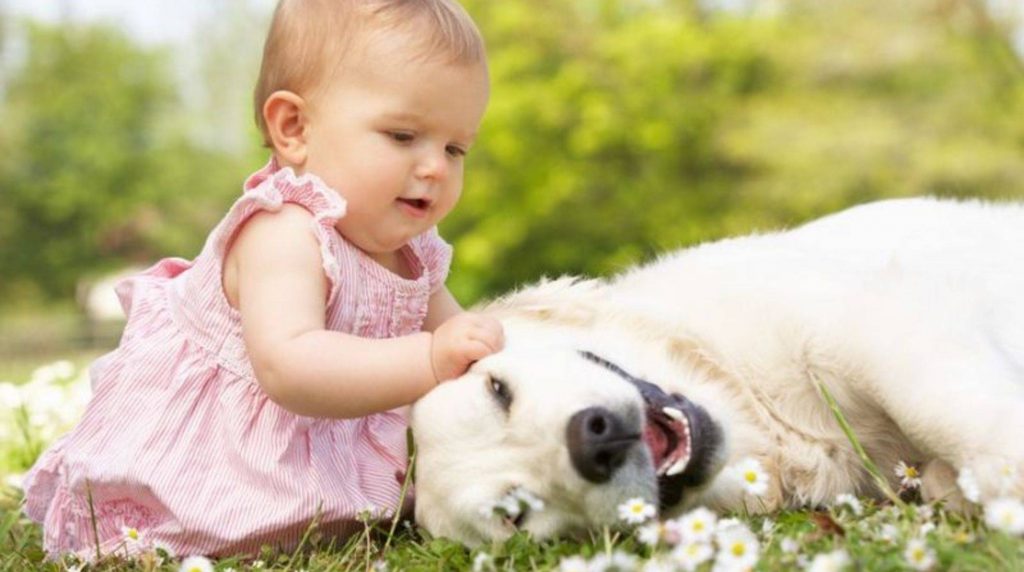
By the way: You may allow your four-legged friend to lick the baby occasionally. It shows his affection for the “young animal.” Nevertheless, hygiene is the top priority: you had better wash yourself and the baby after contact with the dog.
How beautiful the growing up together of dog and baby can be, you can see in the video: “Team for life: Dog and baby grow up together.”