Dog training with a clicker: how it works!
Dog training with clickers differs from other training methods because it uses only the reward principle. Desired behavior is rewarded with a click sound so that your dog will repeat it voluntarily and willingly.
Instead of punishing the dog for doing something wrong, dog training with clickers focuses on rewarding correct behavior: if your dog heels, fetch the stick, or stops barking, there is a reward. Because the four-legged friends do not always understand verbal praise correctly and constant giving of treats is not necessarily healthy, the so-called clicker is used. The clicker model emits a short “click-clack” as a reward.
From the simple click to the reward
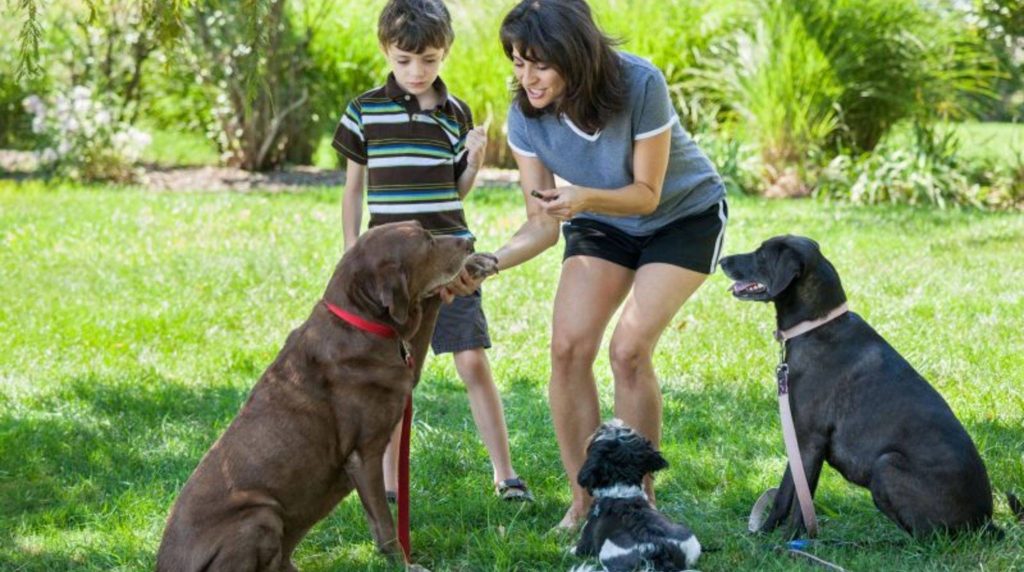
For this principle to work in dog training with clickers, you must establish the click as a reward. This means that if your faithful companion does something right, he will hear the click sound at the same time as a treat – and will eventually interpret the sound alone as a reward.
This is because something pleasant always happens when he hears the click sound. This principle is called positive reinforcement and is based on classical conditioning. Later, you can even praise your dog from a distance without yelling or throwing treats after him. And this is precisely the advantage of clicker training with the dog.
I am using dog training with clicker correctly.
Namely, for your dog to know what behavior he is rewarded, the reward must be given immediately after the desired behavior. Only a little later, he does not know what he was awarded. Dog training with clickers allows you to praise correct behavior easily and immediately – even if your dog is not standing right next to you.
So it’s all about the right timing. If you are too late, he will most likely misunderstand the praise. To avoid such mistakes, it’s best to learn clicker dog training from someone already experienced. In addition, the realistic clicking sound cannot replace loving and patient dog training, of course. As a supplement, for example, to teach your dog tricks and challenge his intelligence, clicker training is wonderfully suitable.
In the following video, you can see once again the practical example, how dog training with the clicker works: