My dog barks at other people: Parenting tips
Your dog barks at people? It doesn’t matter whether it’s strangers, neighbors, or guests: If your furry dog goes into a loud panic every time you have visitors or walk past someone, it’s stressful for both two and four-legged friends. However, with a bit of patience, you can get this behavior under control.
Dogs have only minimal possibilities to express themselves verbally. A dog barks at strangers for a variety of reasons. If you want to get your animal companion to stop barking, you must first find out the motive of your four-legged friend: Why does your dog bark at other people?
Barking as normal communication behavior
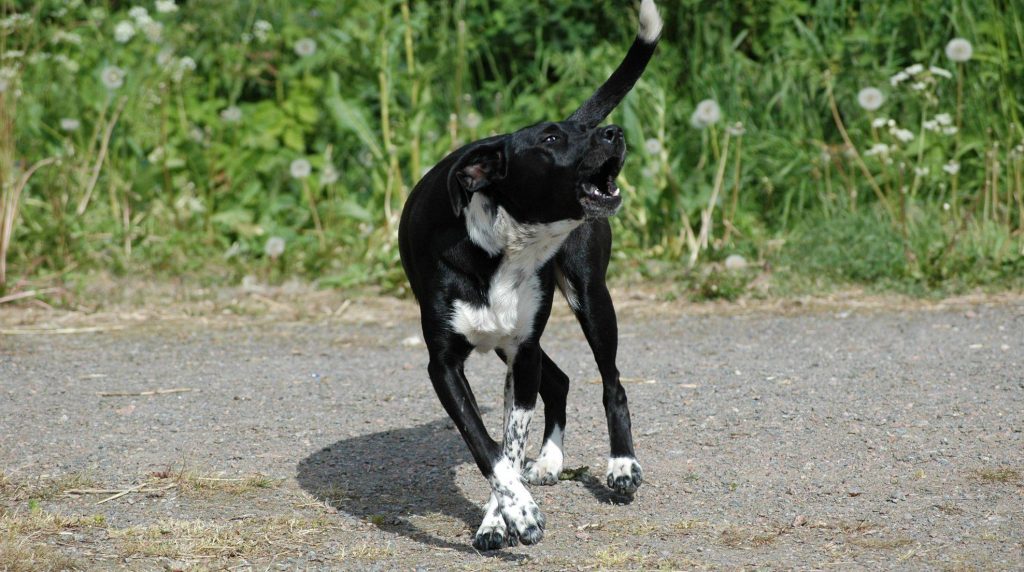
Unlike humans, dogs do not have a wide range of verbal communication possibilities. Barking can therefore express joy or fear, draw attention to needs such as hunger or going for a walk, or even say: “This is my territory. Go away!”. Some breeds are more “talkative” than others, such as beagles, terriers, or miniature schnauzers.
What exactly your dog wants to say, you can usually infer from the situation and his body language. Try to answer the following questions:
Which groups of people are being barked at Men, children, cyclists, people wearing specific clothing?
Does your dog bark only when you have visitors at home or also when you go for a walk?
At what distance does your dog start barking?
The first step to barking less is to observe your furry friend closely.
Barking discharges energy
Dogs are creatures of habit. Many times, it has been their master or mistress coming through the door. As soon as something is heard at the door, the four-legged friend, therefore, builds up a lot of energy to greet his owner joyfully, rushes to the door, and then – there is not the beloved reference person at all, but some strange person with whom he spontaneously does not know how to deal. All the energy now has no goal and often discharges in spontaneous barking.
Dogs raised without excessive greeting rituals show significantly less barking behavior towards guests. For example, guard dogs must be actively taught to bark again because they are too stoic in their training to feel the need to do so on their own.
Fearful dog barks at people: A sign of insecurity
Barking can often be a reflex when your dog is unsure or afraid. Take this fear seriously and act without reinforcing the dog’s barking behavior. Conditioned relaxation or distraction can help but may not work in every situation. For the latter, you can, for example, talk calmly to your pet and get at a distance from the fear trigger (human, noise, or similar).
Conditioned relaxation, on the other hand, needs some preliminary work. Practice a specific signal word that you associate with an everyday situation with your dog. For example, massage or stroke your dog while saying “calm” or “easy.” Your dog learns to associate the word with the relaxed state. After a bit of practice, the furry nose usually succeeds in becoming much calmer spontaneously, even in exciting situations, in response to the signal word.
In the long term, however, you should strengthen your dog’s self-confidence by, for example, going out more and getting him used to disturbing stimuli. If necessary, get help from a veterinarian or an animal psychologist.
Barking for territorial problems
Barking at home can indicate a problem with excessive territorial behavior, mainly if the barking not only occurs when the visitor arrives but is also triggered by small things, such as a guest getting up from the table. Your dog barks aggressively at people because he sees them as intruders into his territory.
Give your four-legged friend security by showing him that he can rely on you as a “pack leader” and that you know what to do. Give the dog fixed places that belong to him, while the rest of the house is your kingdom.
Four steps to get your dog to stop barking at people
- Observation: Who is being barked at? When and where is barking?
- Recognize signals and stop barking before it starts.
- Interrupt barking by using counter signals (for example, train a stop signal such as “quiet” that is used exclusively to stop barking, and reward your furry friend for correct behavior)
- Long-term desensitization and counter-conditioning
Train your dog to stop barking with positive reinforcement only.
Reward your furry friend for staying quietly in place when the doorbell rings or distract your dog with play sessions in acute situations. Calmness and patience are the essential things in dog training. If you scold your four-legged friend, he will understand this at best as a counter-bark on your part and feel all the more the urge to yap.