
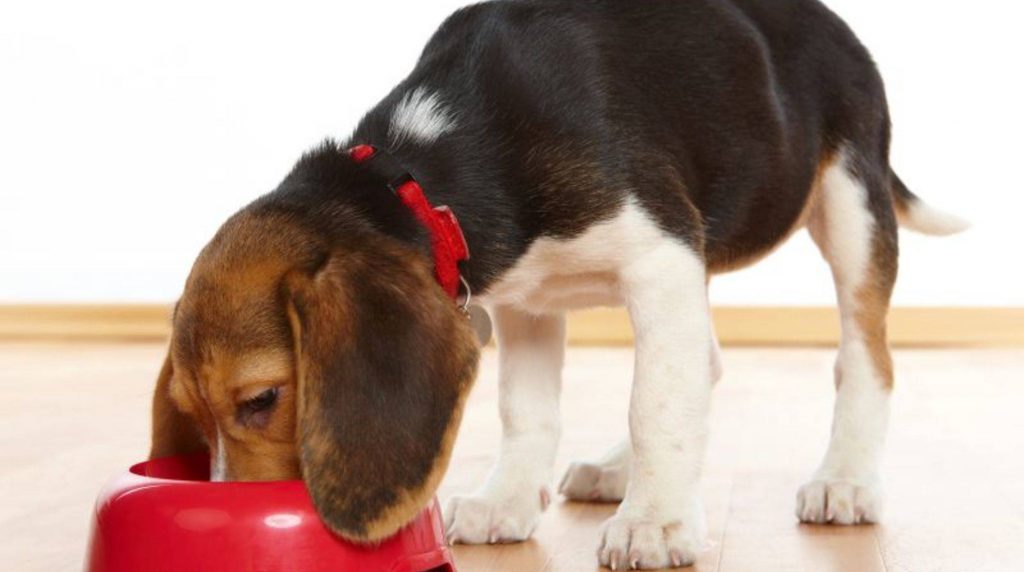
Puppy nutrition: food for young dogs
Good food is elementary for the growth and health of young dogs. Here are a few tips on what junior four-legged friends need for a healthy start in life, and what you should look for when feeding them.
- for rearing or supplementation in the first four weeks: Puppy milk
During the first three to four weeks of life, you don’t need to worry about the right puppy food, because during this time the animal children only drink milk. However, if their mother dog does not produce enough milk, your vet may advise you to add some. For such cases, there are special puppy rearing milks. Between the fourth and the sixth to seventh week of life, the puppy then begins very slowly to get used to puppy food.
- for accustoming: puppy food with warm water
Baby dogs get their milk teeth when they are between three and four weeks old. From then on, you can always provide them with some wet puppy food mixed with warm water in a 1:1 ratio. They are still drinking milk at this age, but are slowly starting to transition to real food as well. If the puppies tolerate the food well, you can reduce the water content a little over time. It is important that you choose a high quality product. It should have a high energy content and contain all the nutrients that the puppy needs.
- feed dry food to puppies: What to look out for
If you want to feed your puppy dry food instead of wet food, you should also pay attention to a few things. In the habituation phase, grind it for the puppies and mix it with water in a ratio of 1:3. Of course, this food should also provide the puppy with all the nutrients it needs and meet its high energy and protein requirements.
- puppies of large breeds have special needs.
Puppies of large, heavy and fast-growing dog breeds such as the Great Dane, Rhodesian Ridgeback or Newfoundland have special feeding requirements because they multiply their body weight at lightning speed. The right nutrients, especially a balanced amount of calcium and phosphorus, will ensure that their musculoskeletal system develops well and that they neither grow too fast nor too slow and gain weight. Be sure to consult your veterinarian about which food is suitable for your dog and in what quantity.